High-functioning burnout: symptoms & how to alleviate it
Where is the line between being driven to succeed and depleting your energy?
This article will cover the difference between being a high-functioning worker and reaching high-functioning burnout.
As a licensed therapist who works with high-functioning Latinas in New York, I help my clients create a healthy balance between achieving their goals and savoring the other parts of their lives so that they can truly live well.
High-functioning workers seem to have endless reserves for work. They approach projects with a laser-like focus and seldom stop for their own needs. Often, their focus on success masks high-functioning anxiety.
High-functioning personalities are so adept at pushing through their needs that they miss the signs of burnout until it’s too late. That’s why burnout — which weakens performance and emotional stability — manifests differently for high-functioning people.
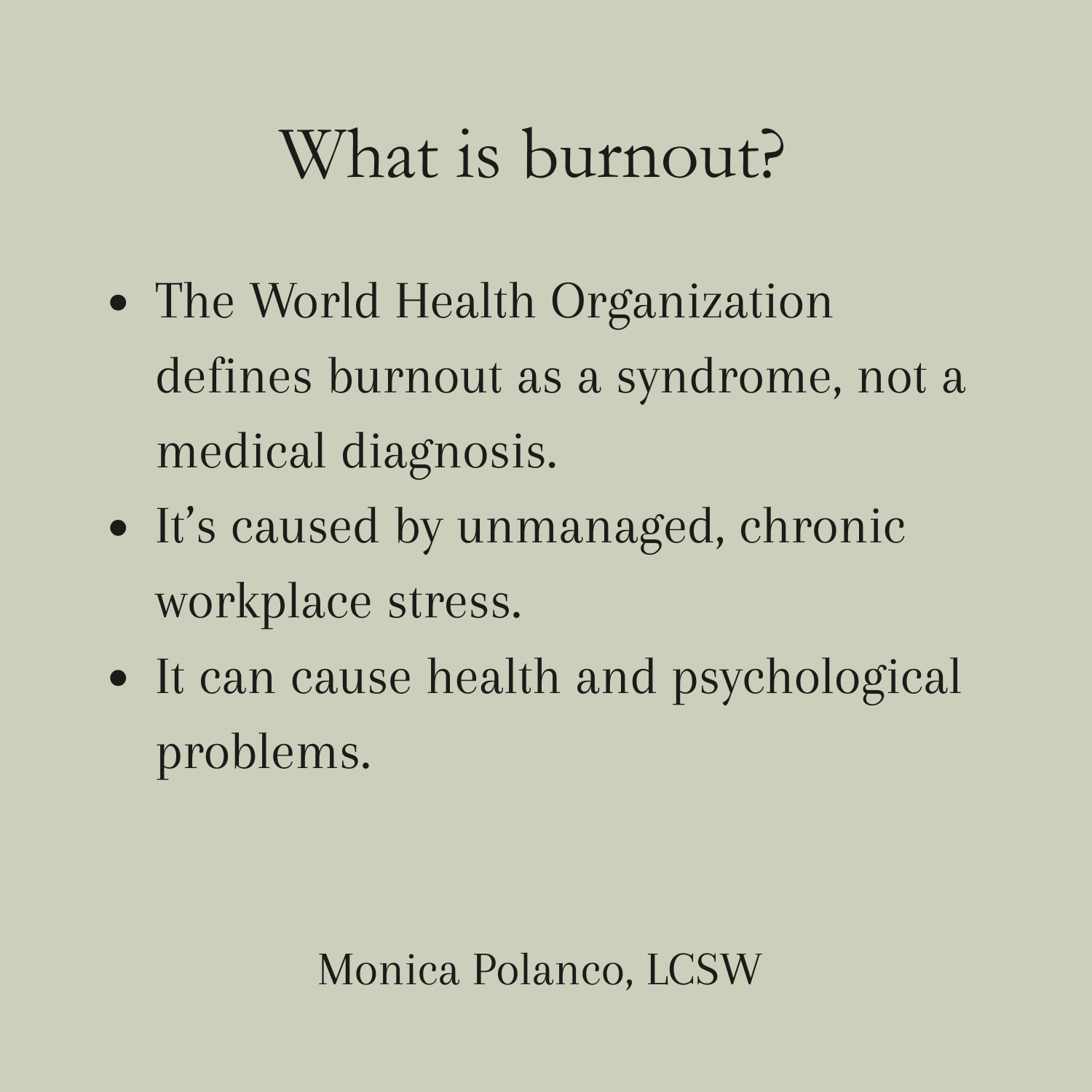
Burnout is a syndrome caused by unmanaged, chronic workplace stress.
What is burnout?
The World Health Organization defines burnout as a syndrome caused by unmanaged, chronic workplace stress.
Burnout, which is not a medical condition, causes the following:
Exhaustion
Cynicism
Feelings of incompetence at work
Impaired cognitive functioning
People who focus on the negative are prone to burnout. Women tend to become more emotionally exhausted, while men tend to become more detached.
Burnout is associated with the following health problems:
Type 2 diabetes
High cholesterol
Coronary heart disease
Headaches
Respiratory infections
Burnout can cause the following psychological problems:
Insomnia
Depression
Psychiatric hospitalization
Burnout can cause problems at work, including:
Job dissatisfaction
Absenteeism
Presenteeism (being at physically present, but mentally “out of it”)
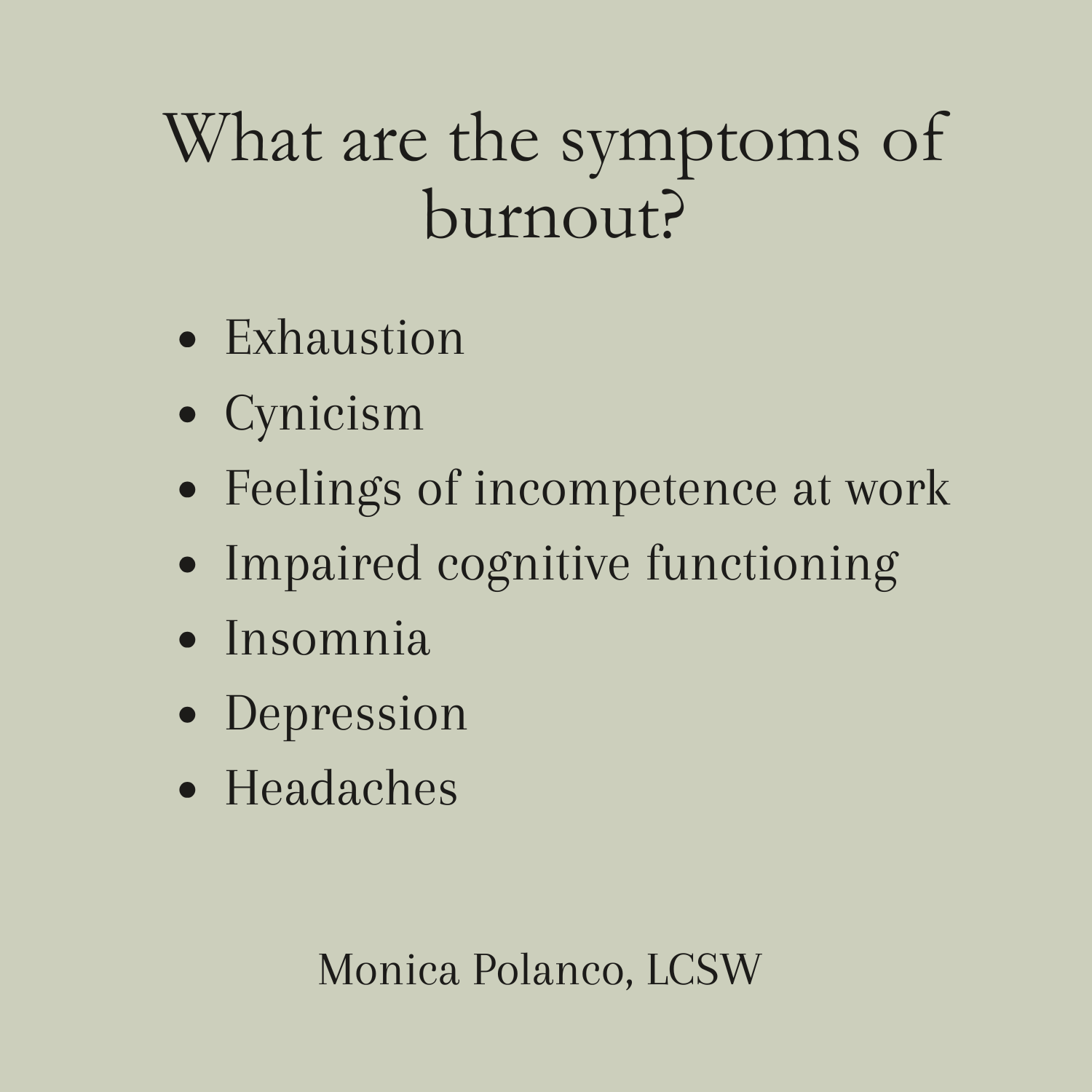
Burnout can cause cynicism, insomnia and impaired cognitive functioning.
How does high functioning lead to high functioning burnout?
People who function at a high level are skilled at ignoring their needs. They disregard the signals their body sends them when they need a break, and keep working. Because they’re able to function, they believe they’re okay.
But inside, they’re slowly reaching a crisis point and missing the red flags along the way.
Here are three signs of high-functioning burnout:
1. You’re exhausted but productive
High-functioning personalities keep fulfilling their responsibilities even after their nervous systems begin failing. They can function because they’ve trained themselves to function out of a sense of duty, perfectionism and their own demands to keep working. Their focus is external, not internal.
Their exhaustion is subtle, like a feeling of heaviness or disengagement. But because they continue to function, they don’t believe there’s a problem.
This is dangerous. Emotional exhaustion is the strongest predictor of the more severe stages of burnout, which include withdrawal and collapse.
2. You lose focus
This sign typically appears suddenly. Burnout doesn’t just drain your energy, it also impairs cognition — the ability to imagine, process information, problem solve and remember details.
In this stage, tasks that were once second-nature require considerable effort. Multitasking feels like stumbling across an obstacle course. Decision-making becomes plodding and time consuming.
Because high-functioning personalities attach their sense of worth to their competence, these cognitive changes are extremely alarming to them.
These changes don’t arise because of a personal failure. This is not laziness or lack of dedication.
Burnout is a neurocognitive reaction to chronic stress. It disrupts the prefrontal cortex — the part of the brain that controls complex thinking.
3. You don’t appreciate your wins
High-functioning people value success, but when burnout sets in, they no longer experience a sense of accomplishment. Their feelings become muted.
This emotional numbing is key. It suggests that their nervous system has begun to conserve energy, shutting off positive emotions because they require energy, to protect basic functioning. This is survival mode and it can’t go on forever.
Because high-functioning people value outcomes more than their feelings, they ignore their emotional numbing, especially because they continue meeting their goals.
Lack of joy is not to be ignored. It’s one of the clearest signs that burnout is approaching the more serious stages, which can result in depression.
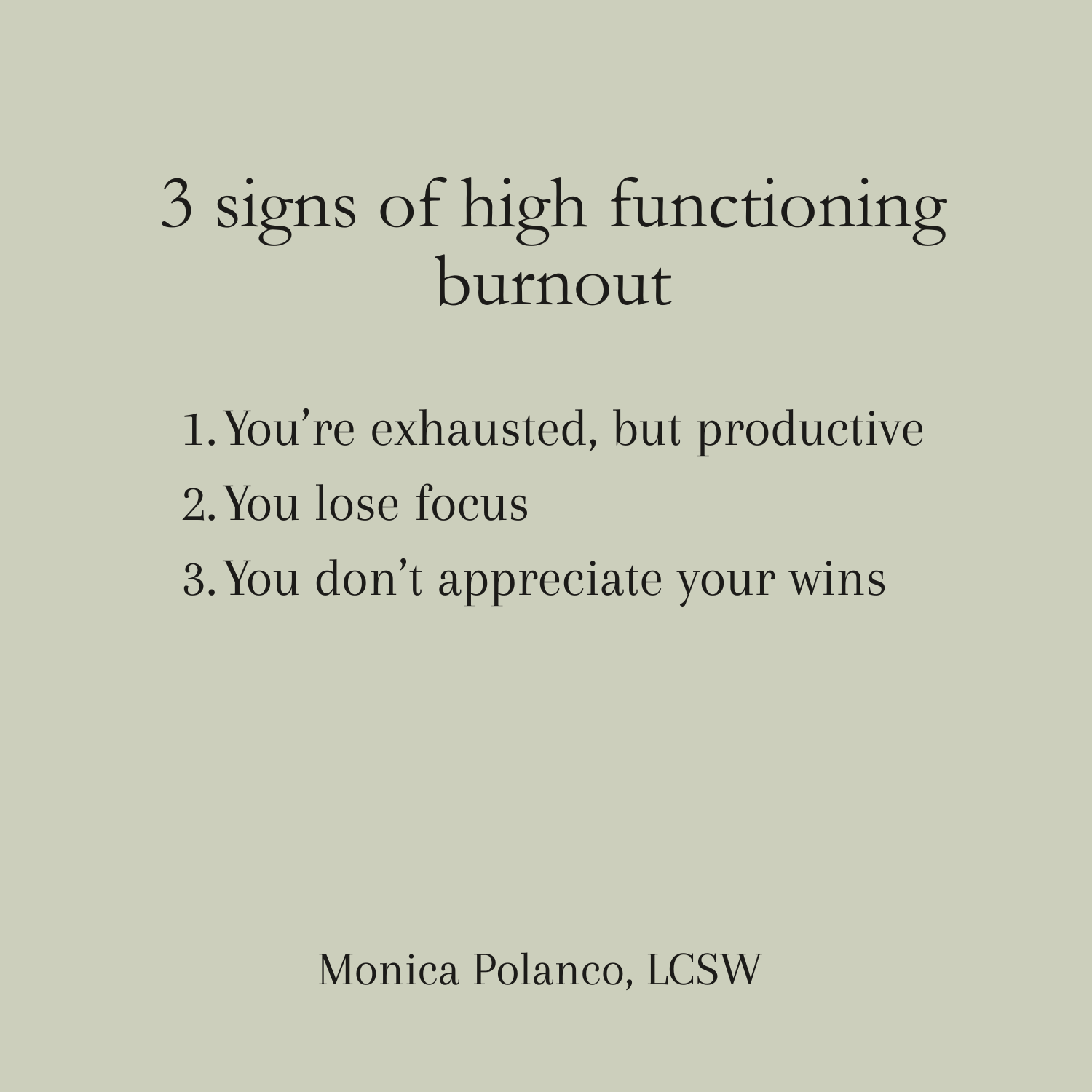
High-functioning burnout is often overlooked until it’s too late. Know the signs.
Treating high-functioning burnout
There is hope.
Early intervention is key. This requires noticing how you feel and valuing the internal (your feelings and body sensations) as much as the external (success).
Therapy can help you develop coping skills, resilience, mindfulness and a much broader sense of self. All of these factors protect against burnout.
In therapy, my clients explore why success is so important to them. Often, they realize that their drive stems from fear, not enjoyment. They learn why they ignore their need for rest — slowing down threatens their sense of self.
Healing burnout requires resting and realigning priorities.
A healthy sense of accomplishment doesn’t require self-abandonment. Self-worth doesn’t only come from what we do, it also includes who we are.
I help my clients discover parts of themselves that they’ve neglected. This helps them expand their sense of self so that they can receive fulfillment from multiple pathways.
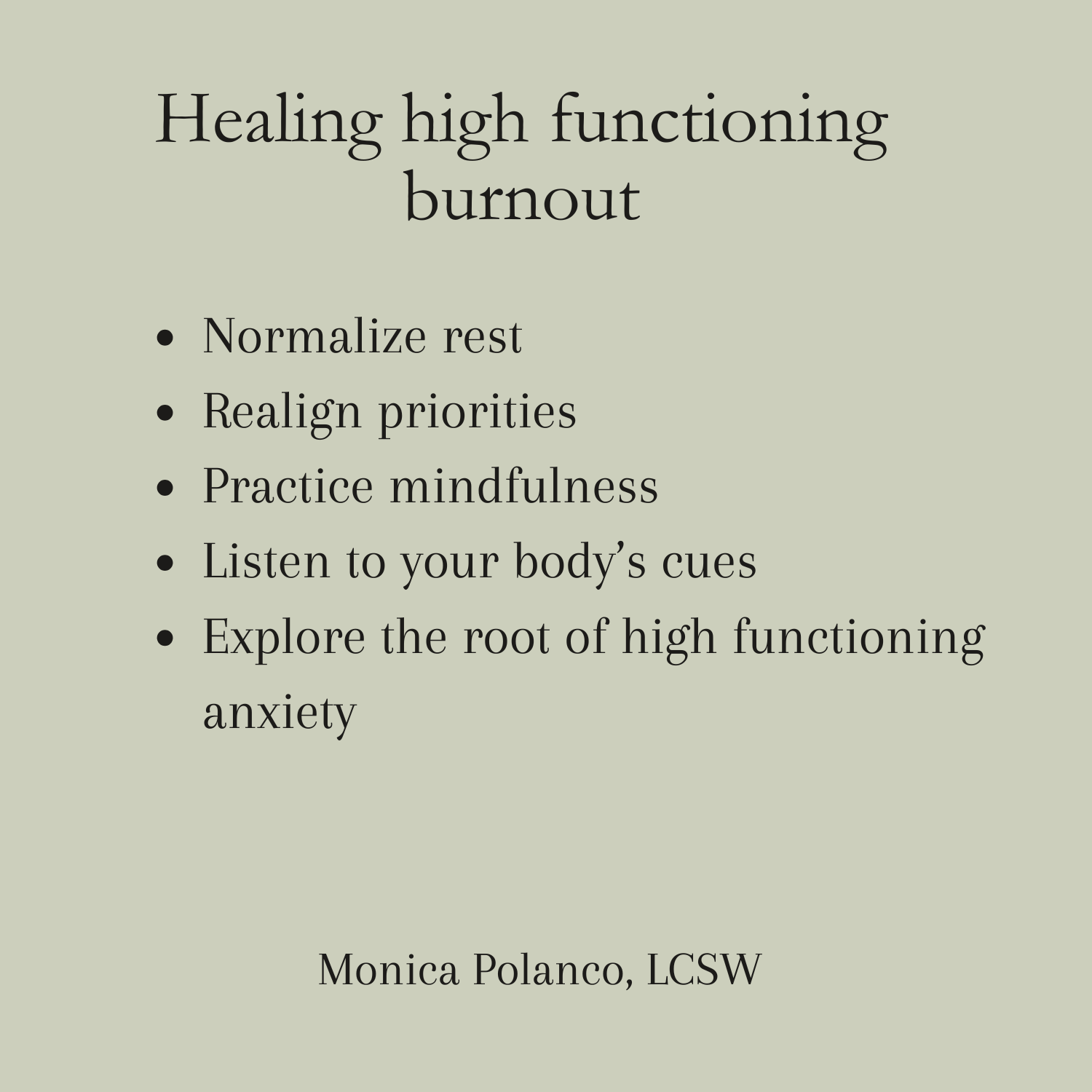
To heal high-functioning burnout, slow down, listen to your body and explore your believes about achievement.
High-functioning burnout: Conclusion
High-functioning people are responsible to a fault. Their drive helps them succeed, but when taken too far, it can deplete their nervous systems and set them up for physical and psychological problems.
High-functioning burnout often develops after sustained periods of pushing past the body’s limits.
But it doesn’t have to.
Burnout therapy can be an opportunity to rest, restore health and create a sustainable vision of success.
If you’re looking for a licensed therapist in New York who understands the unique challenges of being a high functioning Latina, I can help. I also support women who are seeking a Spanish-speaking therapist in New York.
I invite you to book a free consultation here. I’d love to see if we’re a good fit.
Sources
Beiträge, W. (2024). Burnout: A comprehensive review. Zeitschrift für Arbeitswissenschaft, (78), pp 492-504.
(2025, Nov. 11) High-Functioning Anxiety vs. Burnout: How to Tell the Difference Part 2. Daybreak Counseling Center: daybreakcounselingcenter.com.
Travers, M. (2025, November 25). Three Signs You’re Facing ‘High-Functioning Burnout,’ By A Psychologist. Forbes.